

Gazebo weights and pegs
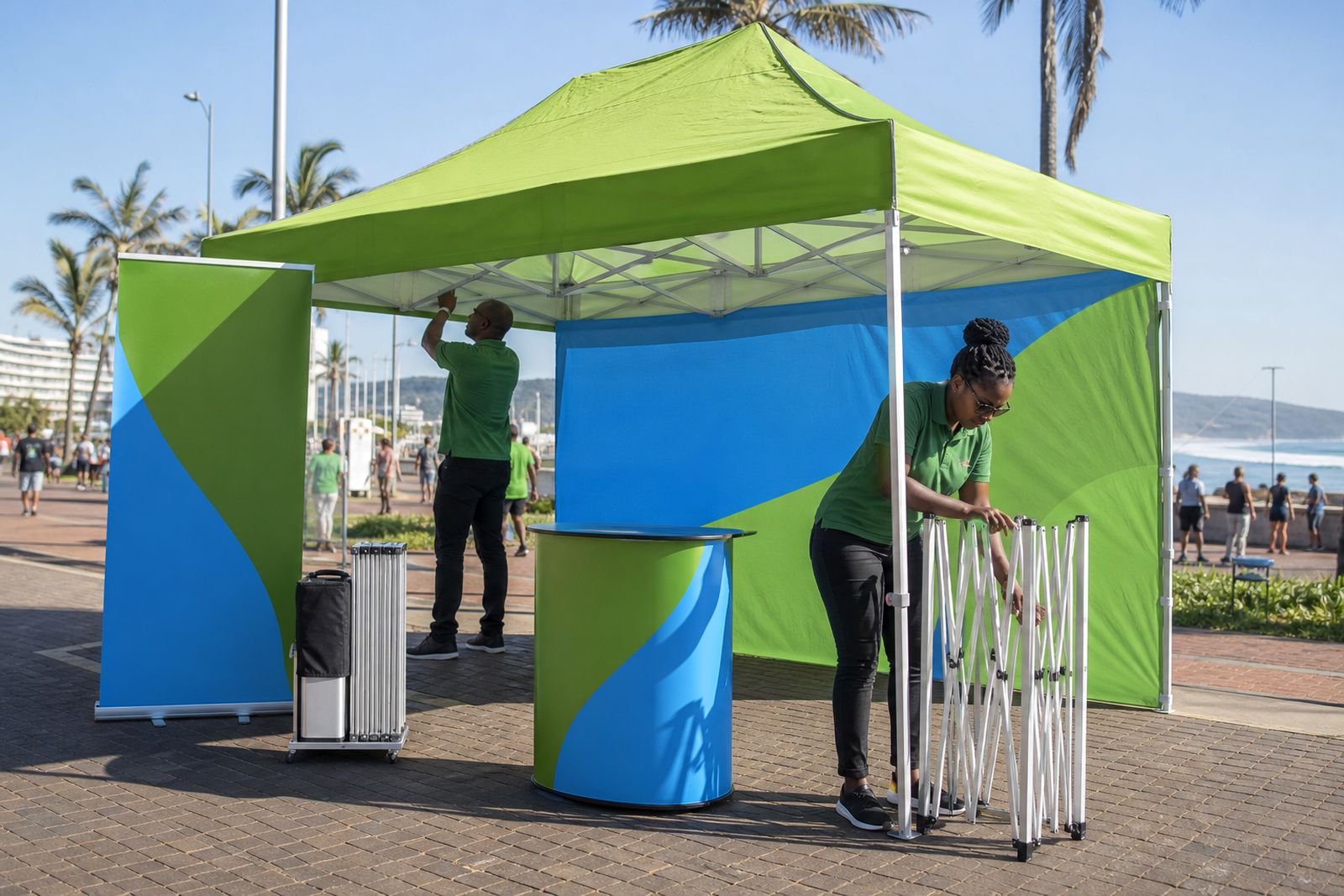
A printed gazebo needs more than a good frame and roof print when the weather shifts at an expo or market. We supply weight and peg options that help keep the structure planted on grass, paving and sandy coastal sites.
What these options do at ground level
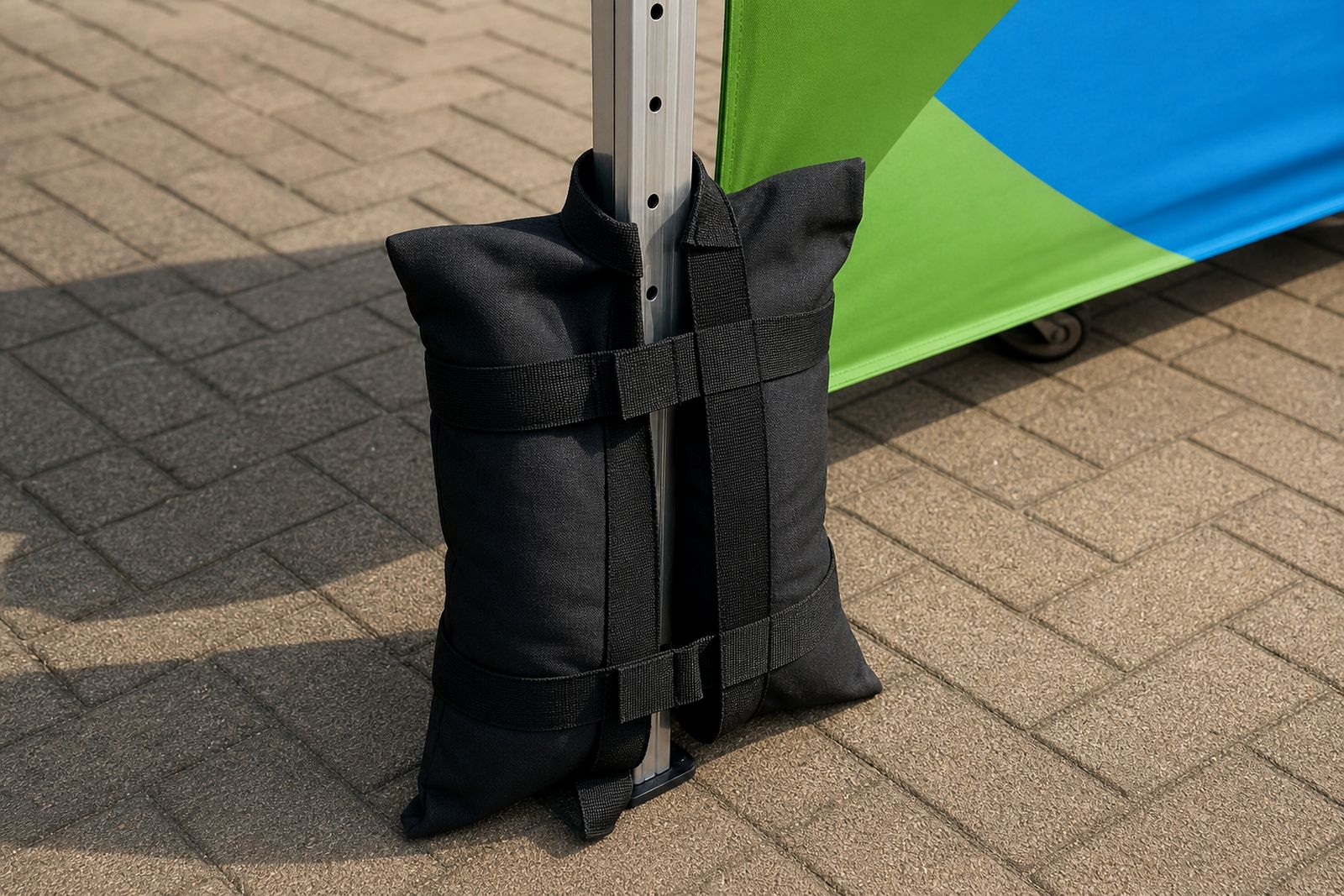
Weights and pegs are the part of the gazebo setup that deal with movement where the feet meet the surface. The frame carries the roof and legs, but the holding power comes from the base choice. On a calm indoor floor you may get away with very little, yet an outdoor Durban morning can change quickly once the wind picks up off the coast.
For paved venues, weights add downward force to each leg so the frame is less likely to shuffle, lift or twist. For grass, compacted soil and some sports fields, pegs anchor the feet into the ground and resist sideways pull. On sand, you usually need a heavier plan and a bit more care during setup because the surface gives way more easily.
- Weights suit paving, concrete, indoor halls and hard courtyards.
- Pegs suit grass, firm soil and open field setups.
- Some sites need both, especially near the coast where gusts arrive unevenly.
When the extra spend is worth it
Adding weights or pegs is worth paying for when the gazebo will stand outside for several hours, when the site is exposed, or when foot traffic around the stand is heavy. A busy expo entrance, school field day or beachside activation puts more strain on the frame than a sheltered courtyard. It is also a sensible add-on when printed sidewalls are used because fabric panels catch more wind than an open-sided gazebo.
If the venue rules do not allow staking into the ground, weighted feet become the practical choice. If the event is on municipal grass and the organiser allows pegs, pegging the corners usually gives better resistance per leg than relying on light ballast only. Many clients skip this on the first order then find out the hard way that movement starts with small nudges and then becomes a safety problem.
- Worth adding for coastal venues, sports grounds and open parking areas.
- Useful when sidewalls, half walls or banners are attached nearby.
- Important where the gazebo stays up through changing weather and long trading hours.
How weights are fitted and how pegs are set
Weight units fit at the base of each gazebo leg. The common arrangement is one weight per leg for moderate conditions, with heavier combinations used where the site is more exposed. The weight sits low, close to the foot, which matters because a high tie-on point does less to stop rocking. During setup the frame is opened, roof tensioned, then the weights are placed before the final leg height is locked.
Pegs are fitted through the foot plates once the gazebo is square and standing level. Each peg should go in at an angle that resists pull rather than straight down. On firmer ground, a heavier hammer helps seat the peg properly. On softer ground, longer pegs hold better, but they still need checking as the day goes on because repeated gusts can work them loose a bit.
Neither option fixes a badly opened frame or legs set at uneven heights. Start with the frame straight, the roof tension even and each foot fully planted before adding hold-down gear.
Compatibility with our printed gazebo range
These options are intended for our portable printed gazebo setups, including the 3 x 3 m printed gazebo. Weight sets are chosen to match the leg layout and foot shape of the frame, so it helps to order them with the gazebo or mention the frame you already have when asking for spares. Pegs are less model-specific, but the length and thickness still matter if the feet have narrow anchor holes.
If your gazebo was bought elsewhere, send clear photos of the foot plate, leg profile and overall frame. We can then advise on a practical option, though not every third-party frame takes every weight style neatly. A weight that shifts around the leg or sits too high is not doing the job properly.
- Suitable for our 3 x 3 m printed gazebo option.
- Best results when weights are matched to the correct leg and foot layout.
- Pegs need enough clearance through the foot plate to seat firmly.
Mistakes that cause trouble on event day
The most common mistake is treating all surfaces the same. Paving, lawn and beach sand need different holding methods, and a one-size approach often leaves a corner vulnerable. Another issue is using too little ballast on one side because that side looks sheltered. Wind changes direction, and a gazebo that is fine at 8 am can become skittish by midday.
People also tighten sidewalls without increasing the hold-down plan. A printed wall makes the structure more useful for branding and shade, but it also increases sail effect. On grass, shallow pegs are another weak point. If only the tip is in the ground, the leg can creep outward and twist the roof line. Setup crews sometimes miss this because the gazebo still looks straight at first glance.
Lastly, never leave a gazebo standing unattended in worsening wind. Weights and pegs reduce movement, they do not turn a portable unit into a permanent structure.
Choosing the right mix for your site
For school fields and sports grounds, pegs are usually the first choice if the organiser allows them. For malls, forecourts and indoor event halls, weights are the normal route because there is nowhere to stake into. For beachfront activations, ask about a heavier arrangement because sand and sea gusts are a tougher combination than they look from the parking area.
When you ask for a quote through our contact form, include the venue surface, whether sidewalls are planned, and whether the gazebo will stand in an open or sheltered position. That gives us enough to suggest a sensible hold-down setup without overspecifying it. If you also need the main structure, see our 3 x 3 m printed gazebo page or the broader gazebo range.
What our Event Display customers say
Verified Google reviews
Questions we get asked
Do I need weights if the gazebo is going onto paving?
Yes, paving and concrete normally need weights because pegs cannot be driven into the surface. The amount depends on exposure, sidewalls and how open the venue is.
Are pegs enough for a gazebo on grass?
Often yes on firm grass, but exposed sites may still need extra ballast. Long trading days and coastal gusts can justify using both methods together.
Can these be added after I already own the gazebo?
Yes, provided we can match the hold-down option to the frame foot and leg style. Send the frame details or photos through our contact form before ordering.
Also worth a look
Tell us about the job
Send sizes, materials and where you are through our contact form, and we will come back with the practical options.
Open the contact form